Lens flare arises when bright light interacts with a lens system, causing reflections, scatter, and ghosting that degrade contrast. Practical questions focus on prevention through framing, aperture, and light control, as well as gear choices like coatings and angles. On-set, stray light and internal reflections demand quick troubleshooting and repeatable procedures. A measured approach balances flare as mood with the need for subject clarity, leaving viewers curious about concrete tactics and their trade-offs.
How Lens Flare Happens and Why It Helps or Hurts
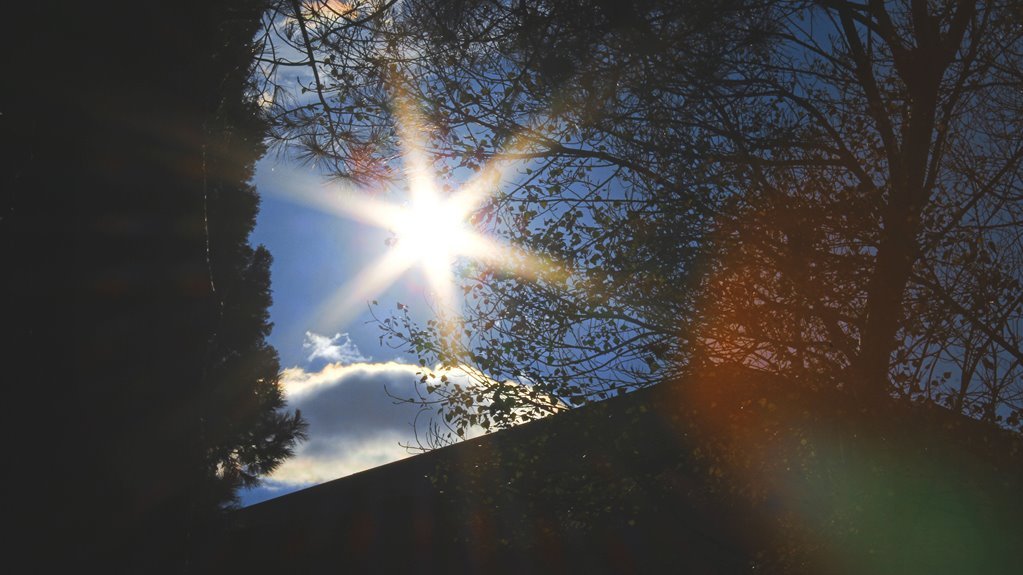
Lens flare occurs when bright light sources strike a camera lens and interact with its optical elements, causing reflections, scattering, and diffraction that produce visible artifacts in the image.
The phenomenon creates intense glare and ghosting artifacts, altering contrast and color fidelity.
Depending on geometry and coating, flare can reduce detail or reveal compositional cues; understanding paths informs practical assessment and design choices for freedom-bound shooters.
Quick Fixes: In-Camera Tactics to Prevent Flare
To minimize flare through in-camera tactics, shooters should control light paths and lens exposure before capture. In-camera measures emphasize aperture and framing, shielding the optical axis from stray light while maintaining desired exposure. Techniques yield a soft glow and controlled light bloom, preserving contrast. This approach favors deliberate composition, minimal processing, and freedom to adapt angles without post-processing dependency.
Gear and Setup: Choosing Lenses, Filters, and Angles
Effective flare avoidance hinges on selecting optics, filters, and shooting angles that constrain stray light while preserving scene fidelity.
The discussion centers on lens types, filter options, and angles that minimize internal reflections.
Consider camera sensor flare behavior and coatings to understand how coatings reduce ghosting.
Practical choices balance flexibility, weight, and cost while maintaining image integrity under varied lighting.
Troubleshooting on Set: When Flare Shows Up Unexpectedly
When flare appears unexpectedly on set, the crew should quickly diagnose whether the source is internal reflections, stray light, or atmospheric haze and implement targeted mitigations. On set indicators guide rapid decisions: adjust angles, reposition lights, or block with flags. If persists, calibrate lens hooding and crop framing; document conditions to avoid unexpected flare recurrence.
When a Little Flare Adds Character: Balancing Control and Creativity
A measured approach considers how minor flare can contribute texture without overpowering composition. In practice, subtle flare can serve as a stylistic cue, signaling atmosphere while preserving subject clarity. The key lies in balance and creativity: control intensity, not erase it.
Flare timing matters—timed highlights can accentuate depth, whereas errant bursts distract.
Aim deliberate, repeatable results that feel purposeful.
Frequently Asked Questions
How Does Lens Flare Affect Color Accuracy in Post-Production?
Lens flare can subtly degrade color accuracy by introducing uncontrolled highlights; it risks color shifts and increased chromatic aberration, compromising color preservation during post-production and demanding careful light management and frame-by-frame correction.
Can Flare Be Used to Convey Mood Without Overpowering the Scene?
Answering succinctly: yes, flare can convey subtle mood if controlled; deliberate placement and intensity create atmosphere without overpowering. Technical approach emphasizes flare avoidance when unnecessary, preserving scene clarity and intent for viewers who value freedom in framing.
Do Different Camera Brands Handle Flare Differently in Practice?
Brands vary in flare behavior: differing optical design and lens coatings produce unique streaks, ghosts, and ghosting patterns. Practical handling reflects brand quirks and corresponding lens coatings, guiding technique to minimize aberrations across diverse camera systems and workflows.
Are There Ethical Considerations When Showcasing Flare in Documentary Work?
A notable 62% of editors link flare usage to perceived honesty in storytelling, reflecting the ethics of flare and documentary integrity. It cautions, yet enables, controlled aesthetic choices within transparent disclosure and responsible depiction for freedom-driven audiences.
How Does Sensor Size Influence Flare Behavior and Stabilization Needs?
Sensor size influences flare morphology and stabilization needs through sensor architecture and microlenses; larger sensors exhibit subtler veiling glare, while stabilization requirements increase with amplified image movement. Lens coatings and micro-optics mitigate artifacts, guiding practical workflow decisions.
Conclusion
In a dry, technical register, the conclusion knits the guidance into a practical stance. Lens flare remains a controllable nuisance, not a random misfortune. When planned, it can accentuate atmosphere; when mismanaged, it ruins contrast and color fidelity. The balanced expert cherry-picks angles, coatings, and lighting with the same rigor as a metronome. The satire is subtle: we measure radiance, not romance, yet acknowledge that a touch of flare sometimes sells the moment—properly, with disciplined restraint.