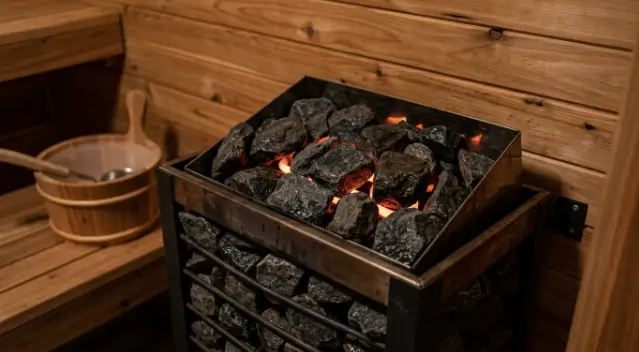
For two people using a sauna every day, the setup that holds up best is a hardwired 6 to 8 kilowatt electric heater with a digital external controller, roughly 65 to 90 pounds of sauna rock, and a bench layout that keeps both seats within the same heat band. Daily use punishes undersized heaters and cheap plug-in units faster than occasional weekend use does, so the setup worth paying more for up front is the one built for a heating element that runs almost every day of the year.
How Big a Heater Does a Two-Person Daily Setup Need?
A cabin built for two people typically runs 70 to 100 cubic feet, and daily use argues for sizing at the upper end of the manufacturer’s chart rather than the minimum, since a heater working at its ceiling every single day wears out faster than one with headroom. For a well-insulated cedar cabin in that size range, 6 to 8 kilowatts is the common target, compared with 4.5 to 6 kilowatts for occasional weekend use in the same box. The extra kilowatt or two shortens preheat time and keeps recovery quick after the door opens, which matters more when the sauna is part of a daily routine rather than a Saturday ritual.
Built-In Wired Heaters vs Plug-In Corner Units: Which Wins for Daily Use?
A built-in heater wired to a dedicated 240-volt circuit is the setup most manufacturers recommend for anything above 6 kilowatts, and it is also the more durable choice for daily cycling since the electrical connections are fixed and inspected once rather than plugged and unplugged. A plug-in corner unit on a standard 120-volt outlet tops out around 1.5 to 1.8 kilowatts, which is fine for occasional single-person use but struggles to hold temperature for two people heating the same cabin every day. A plug-in unit also takes noticeably longer to recover heat once the door has opened and closed a few times in a row, which happens constantly when two people are sharing one daily session. Buyers comparing options across brands, including the team at SweatDecks, generally point daily-use households toward the hardwired route once they see the heater-only price listed alongside the electrical work a 240-volt circuit requires.
Is an External Digital Controller Worth Adding for Two Daily Users?
Yes, in most cases. A digital controller mounted outside the cabin lets each person start preheating from the house, set a consistent target temperature, and run a built-in timer that shuts the heater off automatically, which matters more with daily use than with occasional sessions since it removes the habit of forgetting to switch the heater off. Controllers in the $150 to $350 range typically add Wi-Fi or app control, letting one person start heating the cabin fifteen minutes before the other one gets home, a small convenience that adds up over a year of daily use.
How Should the Bench and Heater Guard Be Laid Out for Two?
Two-person cabins generally use either a single wide bench or two offset benches at different heights, with the heater set in a corner or centered along one wall behind its required guard rail. Manufacturer clearance specs typically call for at least 4 inches from the guard to any wall and enough distance from the nearest bench edge that neither person’s legs can brush the rocks. For daily use, an L-shaped bench that lets each person choose a slightly different distance from the heater tends to work better than two identical seats, since heat tolerance varies from person to person even within the same household.
What Rock Load and Refresh Schedule Fits Daily Sessions?
Most 6 to 8 kilowatt heaters call for 65 to 90 pounds of rock, usually a peridotite or olivine blend chosen for its ability to hold heat without cracking apart quickly under repeated water contact. Daily use accelerates rock breakdown, and a rock bed that would last two to three years under weekend use often needs a partial refresh within twelve to eighteen months of daily sessions. Checking the rock bed monthly for small fragments collecting at the bottom of the heater, which restrict airflow and reduce efficiency, is a cheap habit that extends the life of the heating elements underneath.
What Ventilation and Cooldown Habits Matter Most With Daily Use?
A cabin used once a day needs a genuine airflow gap, usually a vent low near the heater and another high on the opposite wall, so the wood and the heater’s electrical components get a chance to dry out between sessions rather than staying damp around the clock. Leaving the door cracked for ten to fifteen minutes after each session, rather than sealing the cabin shut immediately, lets residual humidity escape and reduces the long-term risk of the bench wood cupping or the heater’s lower elements corroding. Households running a sauna every single day tend to get more years out of the wood and the heater by treating that short cooldown window as part of the routine rather than an optional step.
What Does Frequent Sauna Use Look Like in the Research?
The research most often cited on frequent sauna use comes from Finnish cohort studies where men reporting four to seven sessions a week showed different cardiovascular mortality patterns than those reporting one session a week, an association summarized in a widely read Mayo Clinic Proceedings review of the evidence. A separate systematic review in Evidence-Based Complementary and Alternative Medicine looked at the physiological effects of regular dry sauna bathing across multiple smaller studies, and a 2023 follow-up review examined how sauna habits interact with other lifestyle factors. None of this research isolates heater type, and it describes population-level associations rather than a guarantee for any one household, but it is the closest available evidence for anyone building a genuinely daily sauna habit.
Frequently Asked Questions
What size electric heater is right for two people using a sauna daily? Most well-insulated two-person cabins do best with 6 to 8 kilowatts for daily use, at the higher end of what a manufacturer’s sizing chart recommends for that cubic footage.
Is a plug-in sauna heater strong enough for daily two-person use? Generally no. Plug-in units on a standard 120-volt outlet top out around 1.5 to 1.8 kilowatts, which struggles to recover heat quickly enough for back-to-back daily sessions with two people.
How often do sauna rocks need replacing with daily use? Daily sessions can wear down rocks within twelve to eighteen months, versus two to three years for weekend-only use. Checking monthly for small broken fragments at the base of the rock bed helps catch the need for a refresh early.
Is a digital external controller necessary for a daily sauna routine? It is not strictly necessary, but it is a common upgrade for daily users since it allows preheating on a schedule and includes an automatic shutoff timer, which reduces the risk of a heater left running unattended.
References
- Cardiovascular and Other Health Benefits of Sauna Bathing: A Review of the Evidence, Mayo Clinic Proceedings, 2018
- Clinical Effects of Regular Dry Sauna Bathing: A Systematic Review, Evidence-Based Complementary and Alternative Medicine, 2018
- Benefits and risks of sauna bathing, The American Journal of Medicine, 2001
By Melissa Cordero